
 EN
How to Visit and Audit an Amusement Machine Manufacturer Factory in China?
Choosing an amusement machine manufacturer from a catalog is one thing; verifying how that supplier builds, tests, documents, and supports machines is another. For a venue operator, distributor, or procurement team, a factory visit in China should turn broad claims into evidence you can compare. The aim is not to find a flawless tour route. It is to determine whether the people, processes, equipment, and records you see can repeatedly deliver the arcade games, redemption equipment, video simulators, or rides in your order.
As a buyer, begin with a practical mindset: price matters, but so do service access, spare parts, change control, and the likelihood that the delivered machines match the agreed configuration. This guide gives you a visit plan for evaluating an amusement machine manufacturer without assuming that every supplier has the same production model or serves the same markets.
Set the Audit Scope Before You Travel
Ask for a production schedule that includes your visit date. A quiet floor is not automatically a problem, but you should know whether you will observe normal production, sample assembly, rework, or only a display area. If an amusement machine manufacturer declines reasonable access to the areas that affect your order, document the limitation and reduce the confidence level of the audit.
Start with Identity, Capacity, and Order Ownership
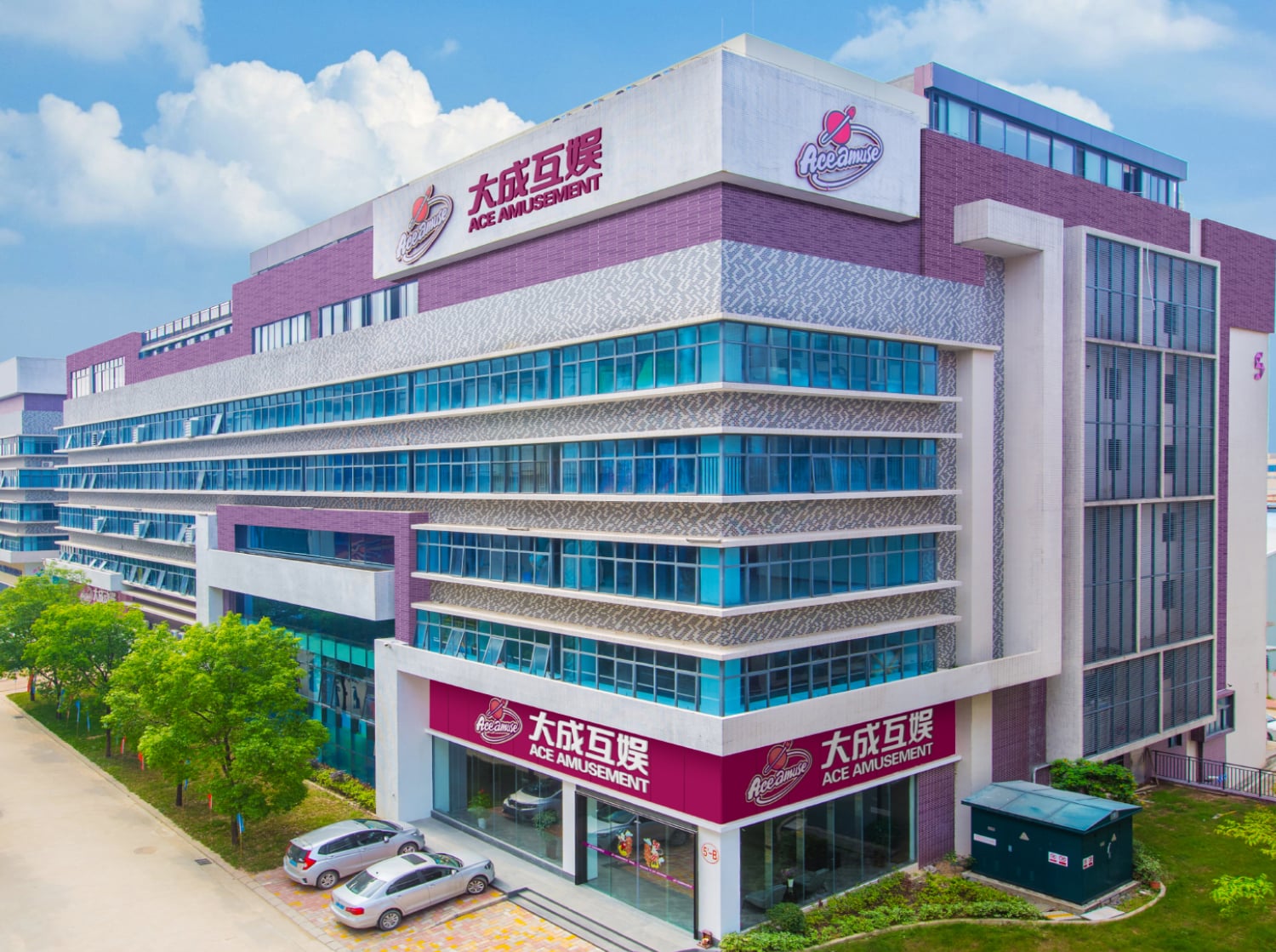
- Confirm the site name and address match the commercial documents you received.
- Ask which processes are performed at the facility and which are outsourced, such as cabinet fabrication, printed circuit board assembly, artwork, or metal finishing.
- Compare the visible workstations, staffing, and material flow with the capacity stated in the quotation.
- Identify the person authorized to approve engineering changes, inspection release, and shipment.
A capable amusement machine manufacturer should be able to explain these points in a consistent way. You are not looking for a scripted answer; you are looking for ownership and a clear path from purchase order to finished unit.
Follow One Machine Through the Production Flow
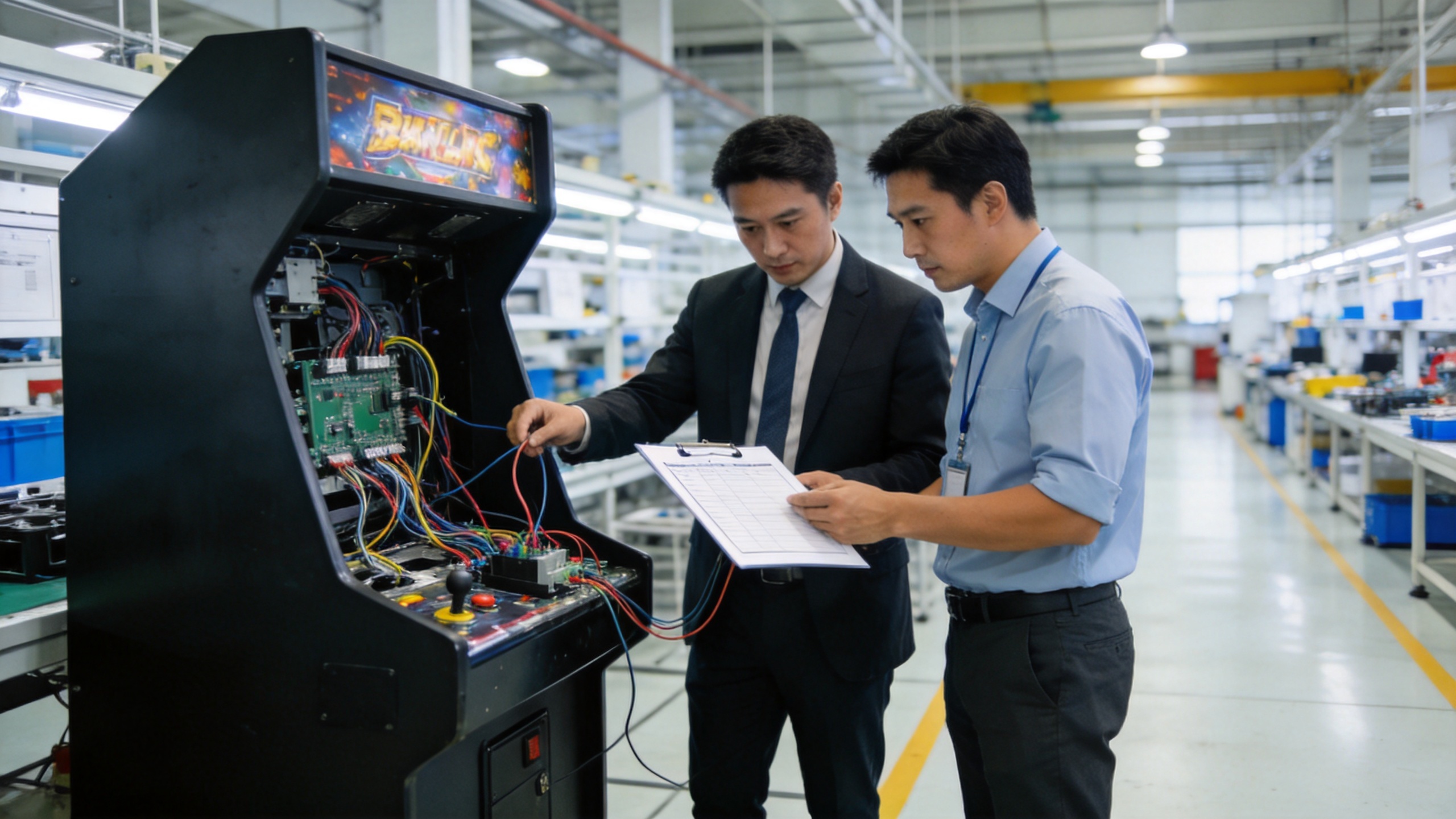
The most useful factory walk is traceable. Choose one model that is being built or prepared for testing and follow it through the process. Look at incoming components, cabinet preparation, wiring, display installation, software setup, functional testing, final inspection, and packing. Take notes against the agreed specification rather than against general impressions.
Inspect Incoming Materials and Build Control
Ask how the team checks high-impact parts before assembly: displays, power supplies, controllers, coin or card systems, speakers, motors, fasteners, and cabinet panels. Look for part labels, quantity control, separated nonconforming material, and a method for preventing an unapproved substitute from reaching the line. In an entertainment venue, a small component change can affect uptime, appearance, or serviceability, so a practical amusement machine manufacturer should know which substitutions require customer approval.
Watch Assembly and Wiring, Not Just Finished Cabinets
Audit Testing and Electrical-Safety Evidence
Ask to see the actual test station and records for the model you are evaluating. Functional play testing is important, but it should sit alongside documented checks for power-up behavior, buttons and controls, sound, displays, payment interfaces, safety interlocks where applicable, and error recovery. For machinery-related electrical equipment, IEC 60204-1:2016 is an example of a reference covering general requirements; your own requirements will depend on the product and destination market. Treat standards as a basis for questions, not as a certificate you assume the factory holds.
- Ask which tests are completed on every unit and which are done by sampling.
- Request completed records, with model and serial or batch identification where available.
- Observe how failed units are marked, repaired, retested, and released.
- Verify that the test equipment in use is identified and that staff can explain the pass/fail criteria.
- Ask for the manuals, wiring diagrams, labels, and destination-market documents that can be supplied with your order.
Do not accept a document logo by itself as proof. Ask what configuration it applies to, whether it covers the exact machine and electrical setup you are purchasing, and what changes would require a new review.
Review Quality Records and Traceability
A factory audit is stronger when the supplier can connect a finished machine to material, assembly, inspection, and corrective-action information. Review a small sample of incoming inspection records, in-process check sheets, final inspection reports, customer-complaint logs, and corrective-action records. If the factory uses serial numbers or batch identifiers, trace one finished unit backward through the available records.
Check Service Readiness, Parts, and Packaging
For arcade and amusement equipment, the audit should extend beyond the end of the assembly line. Ask which spare parts are held in stock, how parts are identified, typical response steps for a field fault, and how software versions are controlled. Clarify what technical support can be provided remotely and what information the buyer must supply when reporting a problem.
Inspect packing materials and one prepared shipment if possible. Verify cabinet protection, moisture protection where relevant, accessory bags, labeling, loading method, and photo records before dispatch. A machine that passes a factory test but arrives with damaged panels, loose accessories, or unclear setup instructions still creates cost and delay for the buyer.
Rapid Evidence Prompts for Your Audit
Use these concise prompts to keep the discussion tied to observable evidence.
- Amusement machine manufacturer: Can show current production scheduling?
- Amusement machine manufacturer: Can identify outsourced processes?
- Amusement machine manufacturer: Can link orders to build records?
- Amusement machine manufacturer: Can show approved component lists?
- Amusement machine manufacturer: Can segregate rejected incoming parts?
- Amusement machine manufacturer: Can explain substitution approval controls?
- Amusement machine manufacturer: Can show current assembly instructions?
- Amusement machine manufacturer: Can demonstrate orderly cable routing?
- Amusement machine manufacturer: Can identify grounding check points?
- Amusement machine manufacturer: Can open service panels safely?
- Factory: Can demonstrate functional play testing?
- Factory: Can define unit-level test criteria?
- Factory: Can retain completed inspection records?
- Factory: Can identify failed units clearly?
- Factory: Can show repair and retest flow?
- Factory: Can provide applicable wiring diagrams?
- Factory: Can control software version releases?
- Factory: Can trace parts to a batch?
- Factory: Can show corrective-action examples?
- Factory: Can explain recurring-defect prevention?
- Factory: Can identify available spare parts?
- Factory: Can document technical-support escalation?
- Factory: Can show packing protection methods?
- Factory: Can verify accessory completeness?
- Factory: Can photograph pre-shipment condition?
- Factory: Can document approved samples?
- Factory: Can approve engineering changes formally?
- Factory: Can identify shipment-release authority?
- Factory: Can explain destination-market documentation?
- Factory: Can assign closing-action owners?
- Factory: Can meet follow-up response deadlines?
- Factory: Can confirm configuration before shipment?
- Factory: Can provide manual revision control?
- Factory: Can show warehouse stock labeling?
- Factory: Can support post-delivery service requests?
Use a Simple Scorecard Before You Leave
Separate observations from conclusions. Rate each area as verified, partially verified, not observed, or needing follow-up: identity and ownership; production flow; incoming controls; assembly; testing; records; documents; after-sales support; packing; and communication. Attach photos and document references to each finding. Before the closing meeting, list open questions and assign a deadline for the factory’s response.
You can then compare suppliers on total sourcing risk rather than unit price alone. A lower quotation may be less attractive if records are unavailable, configuration control is vague, or parts support is unclear. Conversely, a supplier that openly shows limits, explains its controls, and closes follow-up actions promptly gives you more usable evidence for a purchasing decision.
Questions to Ask in the Closing Meeting
- Which points from today’s visit can be included in the purchase-order specification?
- What is the approved sample process before mass production begins?
- How will design, component, or software changes be communicated and approved?
- What final inspection records, photos, manuals, and packing information will be provided before shipment?
- What spare-parts list, service contacts, and escalation path will apply after delivery?
A visit does not replace a clear contract, product specification, or pre-shipment inspection. It gives you the evidence to make those documents more specific. When you audit an amusement machine manufacturer in China with a defined scope, a traceable factory walk, and written follow-up, you are better positioned to select a supplier whose working practices fit your venue or distribution plan.


 Hot News
