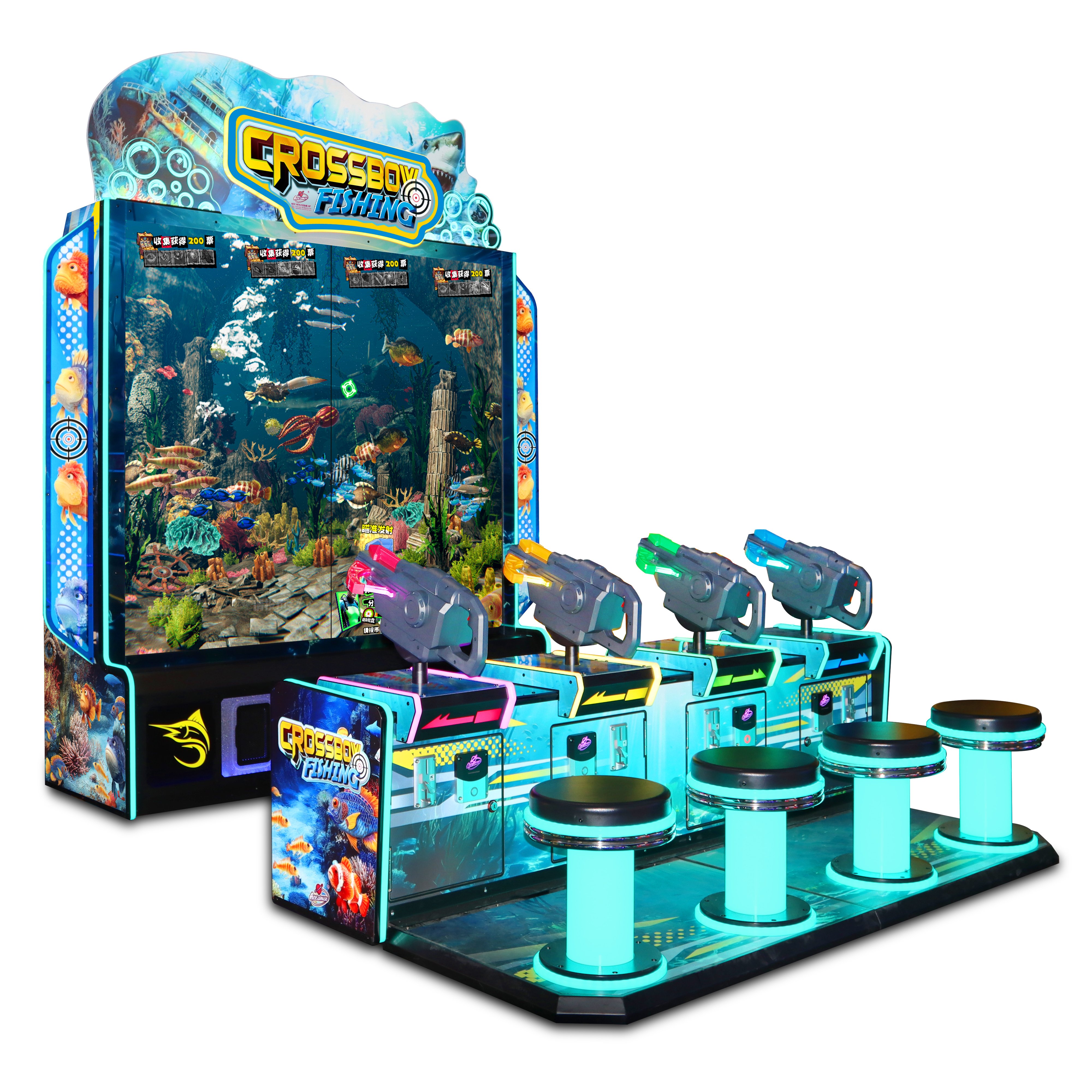
The sticker price of a commercial arcade racing machine in 2026 is only the starting point. Arcade machines built for venues carry costs across the screen, the motion platform, freight, and years of upkeep, and an operator who plans for all of them turns a racing corner into a dependable profit center.
The display is the first cost lever on arcade machines of this class. A 43-inch HD panel sits at the entry end, while a 65-inch twin setup adds a real premium. Larger panels need stronger frames and more powerful graphics hardware, so the price climbs faster than screen size alone suggests.
The seat mechanism separates a light driving game from a true simulator. Compact cabinets rely on vibration and modest tilt, while full-motion platforms deliver pitch, roll, and synchronized feedback tied to on-screen events. Each added axis of movement means more actuators, a heavier steel base, and more demanding electrical work. Power draw is a useful proxy: entry racing cabinets run around 750W, while motion-heavy models reach 900W to 1,000W and often need a dedicated circuit.
Durability quietly shapes the price of commercial arcade machines. Venue-grade units use reinforced frames, tempered glass, and industrial power supplies built for twelve-plus hours of daily play. Home-style shells look similar but fail quickly under public load. A supplier that runs strict quality control quotes higher on paper, yet the total cost over three to five years runs lower because downtime and service calls are fewer.
A regional family entertainment center planned a four-station racing zone inside a 12,000-square-foot venue. The owner first compared list prices alone and nearly ordered the lowest-cost cabinets. The risk became clear during planning: those arcade machines lacked the motion feedback the teenage audience expected, and their power draw did not fit the existing electrical layout.
The operator reworked the plan around total cost of ownership instead of sticker price. Two mid-tier motion cabinets with 49-inch screens were paired with two entry-level 43-inch units, keeping the zone affordable while still offering a premium feel on the flagship stations. High-power arcade machines went on a dedicated circuit, and service capacity was confirmed before installation. The zone opened without an electrical retrofit and held up through the first busy season with no major downtime.
Freight is where many international budgets break. A single racing cabinet can weigh several hundred kilograms, and shipping cost depends on the port, crate dimensions, and whether the order fills a full container. Duties and local taxes vary by destination, and installation often requires a licensed electrician to verify the circuit.
Electrical safety matters for both compliance and daily operation. North American venues should confirm that cabinets carry CE, UL, or FCC markings and that wiring follows local codes, with OSHA guidance applying to staff access around high-power equipment and NFPA standards informing electrical and fire planning. Routine maintenance—checking actuators, cleaning cooling vents, and updating software—keeps arcade machines earning instead of sitting idle.
Request a quote that itemizes the cabinet, motion configuration, freight, duties, and any training or installation support. Ask for wattage and physical footprint so the floor plan and electrical work can be priced up front. Confirm which regional safety certifications are included and whether spare parts ship with the order. Comparing vendors on the same screen size and motion tier prevents judging a 43-inch cabinet against a 65-inch twin unit.
Arcade machines are a long-term capital decision, not a one-time expense. A racing cabinet that costs more to buy but lasts through constant daily play—and ships with real service support—delivers a better return than a bargain unit that sits dark for weeks waiting on parts.
Pricing spans a wide range because screen size, motion platform, and build quality all move the number. Entry cabinets with smaller panels sit at the lower end, while 65-inch twin motion units reach the premium tier. A formal quote that itemizes configuration, freight, and duties gives the accurate figure.
Motion adds actuators, a reinforced steel frame, and heavier power systems. Each extra axis of movement needs more hardware and a dedicated circuit, raising both the unit price and installation cost. The experience difference, however, drives repeat play and stronger per-machine earnings.
Typical draw runs from about 750W for compact models up to 1,000W for motion-heavy cabinets. High-power units usually need a dedicated circuit, so operators should confirm wattage before ordering and have an electrician verify capacity during installation planning.
With regular maintenance, a venue-grade machine typically runs for many years even under heavy daily use. Lifespan depends on build quality, play frequency, and service discipline. Cleaning cooling vents, checking actuators, and addressing small faults early all extend the working life of arcade machines.
Freight, port handling, import duties, local taxes, electrical work, and installation often exceed expectations. Spare parts and technical support should also be budgeted. A quote that lists these items separately keeps the project from running over before the machines ever earn a coin.
Compare cabinets that share the same screen size, motion tier, and certification set. Ask for itemized pricing that includes shipping and duties, confirm wattage and footprint, and check whether spare parts and service support are included, so competing offers become genuinely comparable.
 Hot News
Be the first to get our latest styles and offers.
#5 Building,No.6,HengFeng 6 Road,GangKou Town,Zhongshan,Guangdong P.R CHINA
Copyright © 2025 by ACE Amusement International Co., Ltd.
 EN
EN