
 EN
How Do Top Amusement Machine Manufacturers Handle Custom Design Requests?
For any amusement machine manufacturer, a custom arcade or entertainment project rarely begins with a finished drawing. It often starts with a venue theme, an audience profile, a floor-plan constraint, or a request for a game experience that is not available in a standard catalog. A capable amusement machine manufacturer turns that early idea into a controlled process: clarifying the brief, testing feasibility, documenting approvals, validating the build, and preparing the machine for handover. That distinction matters in day-to-day project management. A cabinet wrap may be a straightforward variation; a change to controls, software behavior, electrical configuration, or player flow needs engineering attention from the start.
For buyers, the more revealing question is not simply, “Can you customize it?” Ask instead how the supplier manages design decisions after the request is accepted. That reveals whether the project will be handled as a repeatable manufacturing workflow or as a series of informal changes.
1. They Begin With a Structured Discovery Brief
A strong amusement machine manufacturer first separates the visible request from the operating requirement behind it. For example, a buyer may ask for a branded redemption machine, but the real brief may include a family-oriented theme, a target footprint, a preferred payment system, local power requirements, a prize-counter workflow, and a launch-date constraint. Those details shape the design much more than the artwork alone.
At this stage, the amusement machine manufacturer should capture the venue type, player demographic, available dimensions, doorway and ceiling limits, local electrical conditions, language requirements, branding files, target market, expected order quantity, and service expectations. It should also identify which elements are fixed and which can remain flexible. That distinction prevents a late visual preference from being mistaken for a safety-critical or production-critical change.
Before getting too far into aesthetics, it is worth asking: are you adapting an existing platform, or asking for a new mechanical and interactive concept? The answer changes the project’s engineering effort, validation needs, and likely production schedule.
2. They Run a Feasibility Review Before Promising the Final Design
Top suppliers do not treat every request as automatically buildable. Their design, production, sourcing, and quality teams review the proposed scope against cabinet dimensions, component availability, controller compatibility, heat management, maintenance access, transport requirements, and the intended market. This is where an experienced amusement machine manufacturer can identify trade-offs before they turn into expensive revisions.
For custom amusement equipment, an amusement machine manufacturer must also consider compliance planning. ASTM Committee F24 publishes standards associated with amusement ride design, inspection, maintenance, and operation, while EN 13814 is a safety-oriented European standard series for amusement devices and rides. Not every product follows the same route, and local requirements vary, but a responsible supplier should ask early which market, authority, and documentation expectations apply. This is more useful than broad certification language that has not been tied to the actual project.
Feasibility reviews typically end with a written statement of what is technically workable, what needs confirmation, what could add cost or time, and what should be avoided. Clear boundaries are a good sign: they help both sides make a deliberate decision rather than discover a limitation after materials have been ordered.
3. They Convert the Idea Into Approved Design Packages
Once the concept is feasible, the next deliverable should be more than a polished rendering. A dependable amusement machine manufacturer normally develops a package that may include cabinet views, dimensions, color and graphic layouts, control-panel placement, screen or lighting positions, component notes, wiring or power requirements, and a bill-of-materials impact where relevant.
With a capable amusement machine manufacturer, approvals should happen in stages. Buyers can approve the overall concept first, then the technical layout, then the artwork or user-interface files. Version numbers and dated confirmation records matter because they establish a single source of truth for the workshop. If a request changes after sign-off, the supplier should describe the impact on materials, engineering, cost, and schedule before proceeding.
One detail is easy to miss: visual approval does not automatically equal production approval. A graphic can look complete while an access panel, ventilation path, service clearance, or button position still needs technical review. Separating those approvals keeps the project moving without hiding unresolved details.
4. They Build Prototypes or Validate Critical Changes Early
The more a request affects function, the more valuable early validation becomes. For a new control layout, interactive sequence, cabinet form factor, or lighting behavior, a supplier may use a prototype, sample assembly, mock-up, or pre-production test. This lets the buyer assess usability and appearance before the full run begins.
The amusement machine manufacturer should test function from the operator’s perspective as well as the player’s. Can staff reach the service points? Are replacement parts identifiable? Does the payment or ticket system integrate correctly? Is the interface readable under the venue’s ambient light? These are not decorative concerns. They determine whether the customized machine remains practical after installation.
Customization can extend production lead time, particularly when it introduces bespoke cabinet parts, branded materials, or software revisions. That is not necessarily a drawback; it is a trade-off to discuss against a venue opening or promotional deadline. An experienced amusement machine manufacturer makes the dependency visible rather than treating it as an afterthought.
5. They Control Production Changes and Quality Checks
After final approval, the amusement machine manufacturer moves the project into controlled production. The manufacturing team uses the confirmed drawings and materials list, while purchasing verifies custom components and quality personnel prepare inspection checkpoints. For a multi-machine order, consistency matters: lighting color, control placement, printed graphics, wiring labels, and software settings should match the approved version across the batch.
Buyers should ask what will be checked before shipment. Depending on the scope, useful checkpoints may include cabinet finish, assembly quality, electrical connections, interactive functions, display behavior, payment or redemption operation, packaging, and serial or configuration records. A photo or video review can be helpful, but it should be part of a documented acceptance process rather than a substitute for testing.
6. They Plan Documentation, Delivery, and After-Sales Support
For an amusement machine manufacturer, custom design is not complete when the crate leaves the factory. A complete handover includes the approved configuration, operating guidance, installation requirements, maintenance notes, spare-parts identification, and a clear channel for technical questions. This becomes especially important if the venue needs to train staff or if the machine contains non-standard controls, graphics, or software settings.
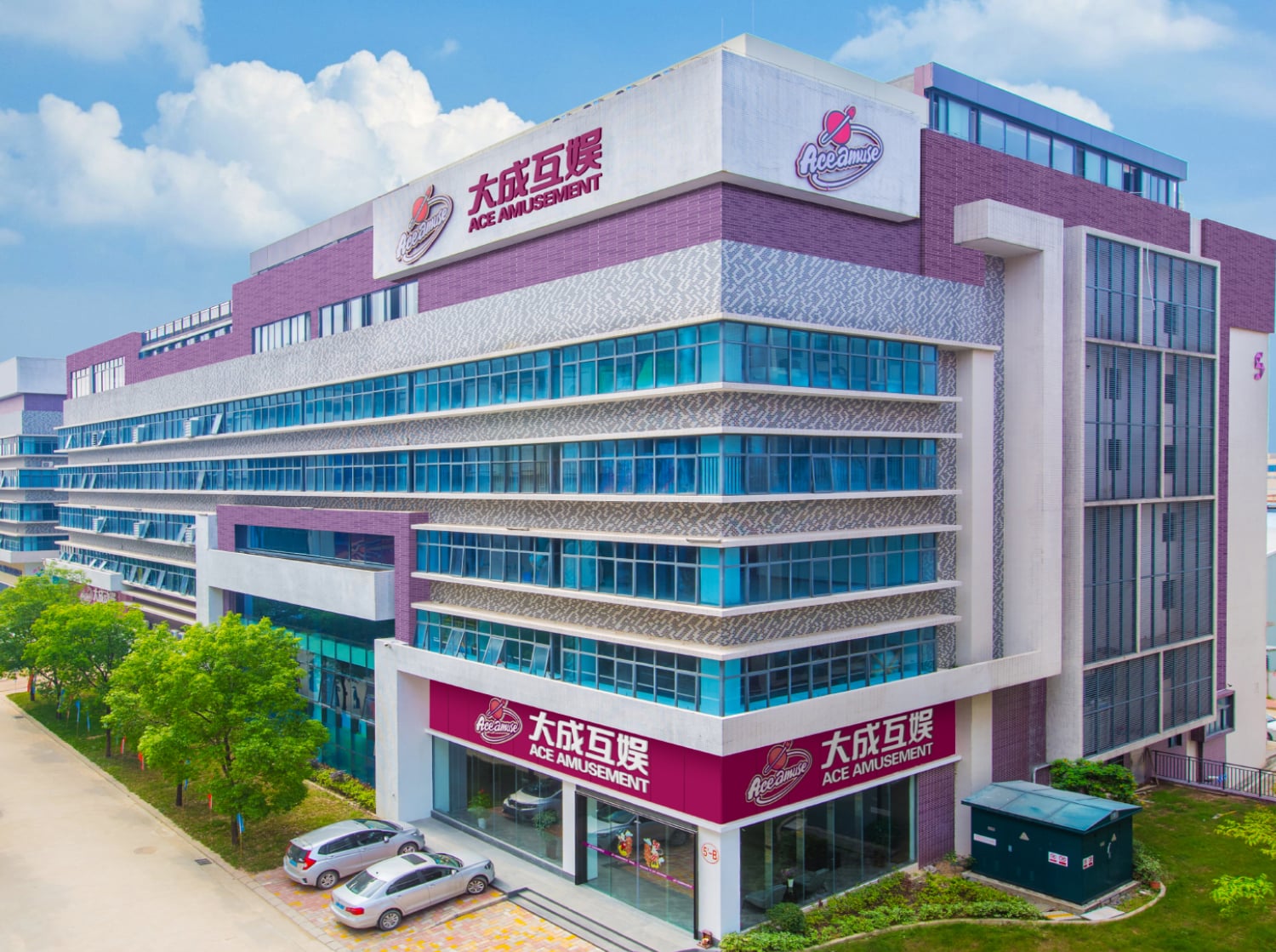
ACE Amusement’s portfolio spans arcade games, redemption machines, video simulator games, and amusement rides, which can help buyers consolidate category discussions with one supplier relationship. Still, a buyer should evaluate the actual custom request on its own merits: clarify who owns the artwork, what replacement parts will be available, how configuration records will be retained, and how support requests will be handled after delivery.
A Buyer’s Checklist for Custom Requests
- Describe the venue, audience, dimensions, electrical conditions, and target market—not only the desired appearance.
- Ask whether the request adapts an existing model or requires new engineering.
- Request a feasibility summary that identifies constraints, assumptions, and trade-offs.
- Use staged approvals with version-controlled drawings and artwork.
- Confirm prototype or pre-production validation for changes that affect function or safety.
- Agree on inspection points, documentation, packing, installation, and after-sales support before production starts.
Choose a Process, Not Just a Custom Look
The most reliable custom project is not the one with the most dramatic rendering. It is the one managed through a transparent chain of discovery, feasibility review, design approval, validation, production control, and support planning. When comparing suppliers, look for an amusement machine manufacturer that can explain that chain clearly and adapt it to your venue’s needs. That approach protects the creative goal while giving operators a more workable machine when opening day arrives.


 Hot News
