
 EN

What Arcade Equipment Accessories Add the Most Value to the Player Experience?
When operators evaluate arcade equipment, the conversation often begins with cabinet size, game category, and visual impact. Players notice something more immediate: whether the game feels clear, comfortable, responsive, and worth another turn. The accessories around arcade equipment can shape that feeling as much as a headline feature. A thoughtful upgrade does not need to be flashy; it needs to remove friction or make a moment of play more satisfying.
For an arcade hall operator, the useful question is not “Which accessory looks impressive?” It is “Which addition improves the player’s next 30 seconds?” That focus helps venues choose arcade equipment accessories that support repeat play across family areas, redemption zones, simulators, and competitive games.
Start with the player journey, not the accessory list
Before adding anything to arcade equipment, watch how guests approach a machine. Can they understand the objective quickly? Can children, teens, and adults reach and use the controls comfortably? Can a waiting friend see why the game is exciting? Do players leave knowing what they achieved? These practical observations reveal where an accessory can add value.
There is no universal upgrade package. A compact family entertainment center may gain more from durable, easy-to-reach controls and clear prize displays, while a simulator zone may benefit from a seat that supports longer sessions and feedback that makes the action feel tangible. The point is to match arcade equipment to the audience and the pace of the floor.
1. Comfortable, responsive control upgrades
Controls are the player’s direct connection to arcade equipment, so responsive buttons, joysticks, steering wheels, pedals, and grips usually carry high experiential value. A control should feel consistent from the first input to the last. Sticky buttons, loose steering, or poorly positioned pedals turn a simple game into work.
Ergonomic details deserve equal attention. Rounded grips, sensible control spacing, stable foot placement, and adjustable seat or wheel positions can make arcade equipment more welcoming to a broader range of players. This matters particularly in family venues, where a cabinet that is comfortable for an adult may be tiring or difficult for a younger player. Accessibility does not have to mean a separate game area; often it means making everyday interaction easier.
2. Seats, restraints, and motion-platform comfort
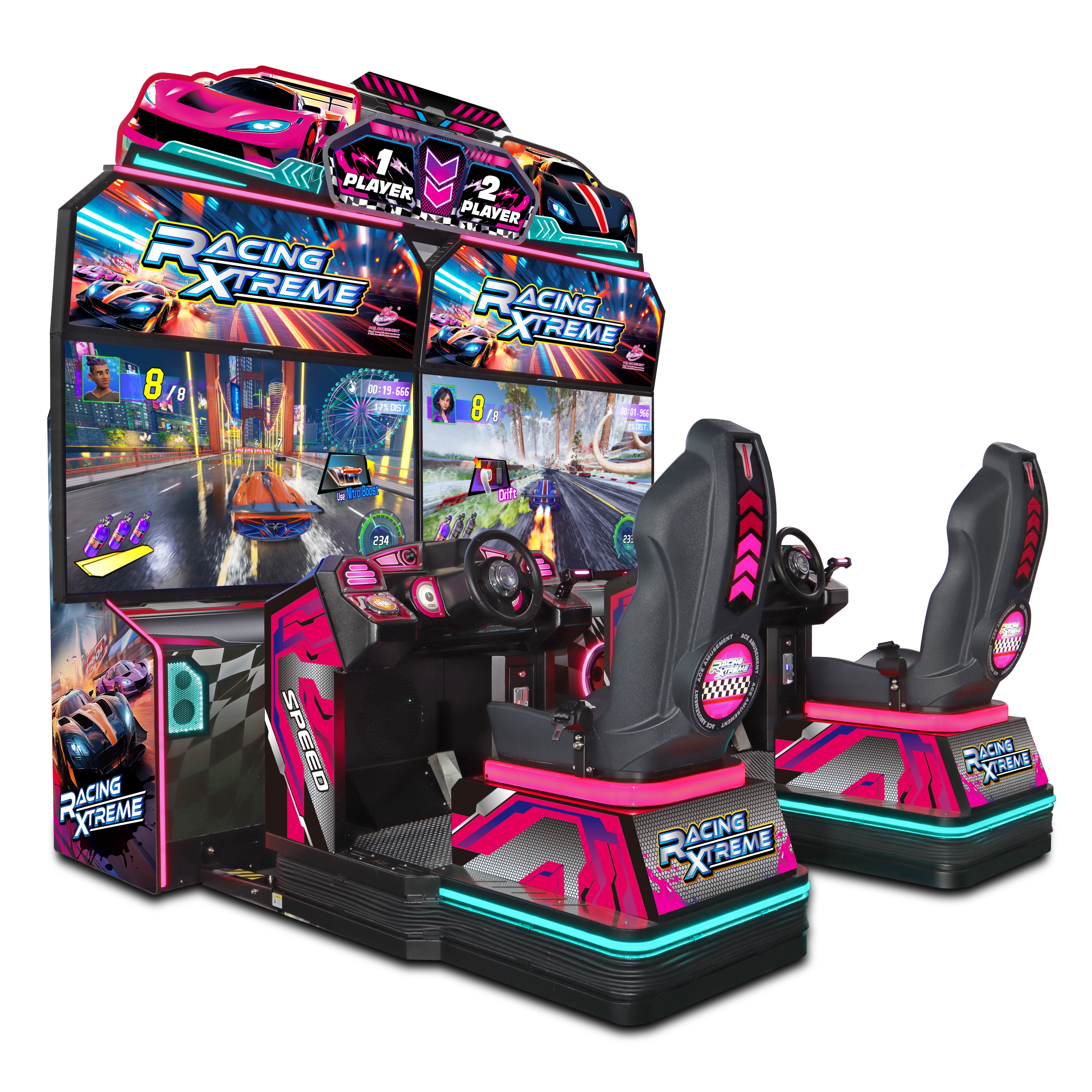
For racing, flight, shooting, and other simulator-style arcade equipment, the seat is part of the game rather than a separate furnishing choice. A stable seat helps players focus on the screen and controls. Supportive padding, secure adjustment points, and an easy entry-and-exit path are more valuable than decorative trim that does not change the ride.
Motion features can add excitement, but only when the movement matches the game moment and remains comfortable. Research on haptic feedback in games suggests that meaningful tactile feedback can increase immersion and interest, while excessive feedback may distract some players. The practical takeaway for arcade equipment is simple: choose feedback that communicates an event—a turn, impact, acceleration, or win—rather than continuous vibration that can distract from play.
3. Clear displays and thoughtfully tuned lighting
Players should be able to read the score, goal, timer, and reward cue without leaning in or asking for help. Display brightness, anti-glare positioning, readable on-screen graphics, and focused cabinet lighting can make arcade equipment easier to enter at a glance. In a venue with windows or bright ambient light, screen legibility becomes a real playability issue, not a minor specification.
Lighting should guide attention rather than compete with every nearby cabinet. LED accents around a start button, prize area, or key game moment can create a useful invitation. On the other hand, overly busy light patterns can hide the instructions or make a compact floor feel visually exhausting. Good arcade equipment lighting gives players a visual path: notice the machine, understand the action, see the result.
4. Audio that signals action without overwhelming the floor
Sound is one of the fastest ways to give arcade equipment a recognizable personality. Directional speakers, clear reward cues, and adjustable volume help a game communicate what is happening. A satisfying confirmation sound after a successful skill shot can be more memorable than louder background music.
Here is the operational trade-off: each cabinet may sound exciting on its own, but a floor full of uncoordinated volume can make every game harder to hear. Use volume control and speaker placement to give priority to important cues. The goal for arcade equipment is an energetic atmosphere in which players can still follow their own game.
5. Visible reward and redemption accessories
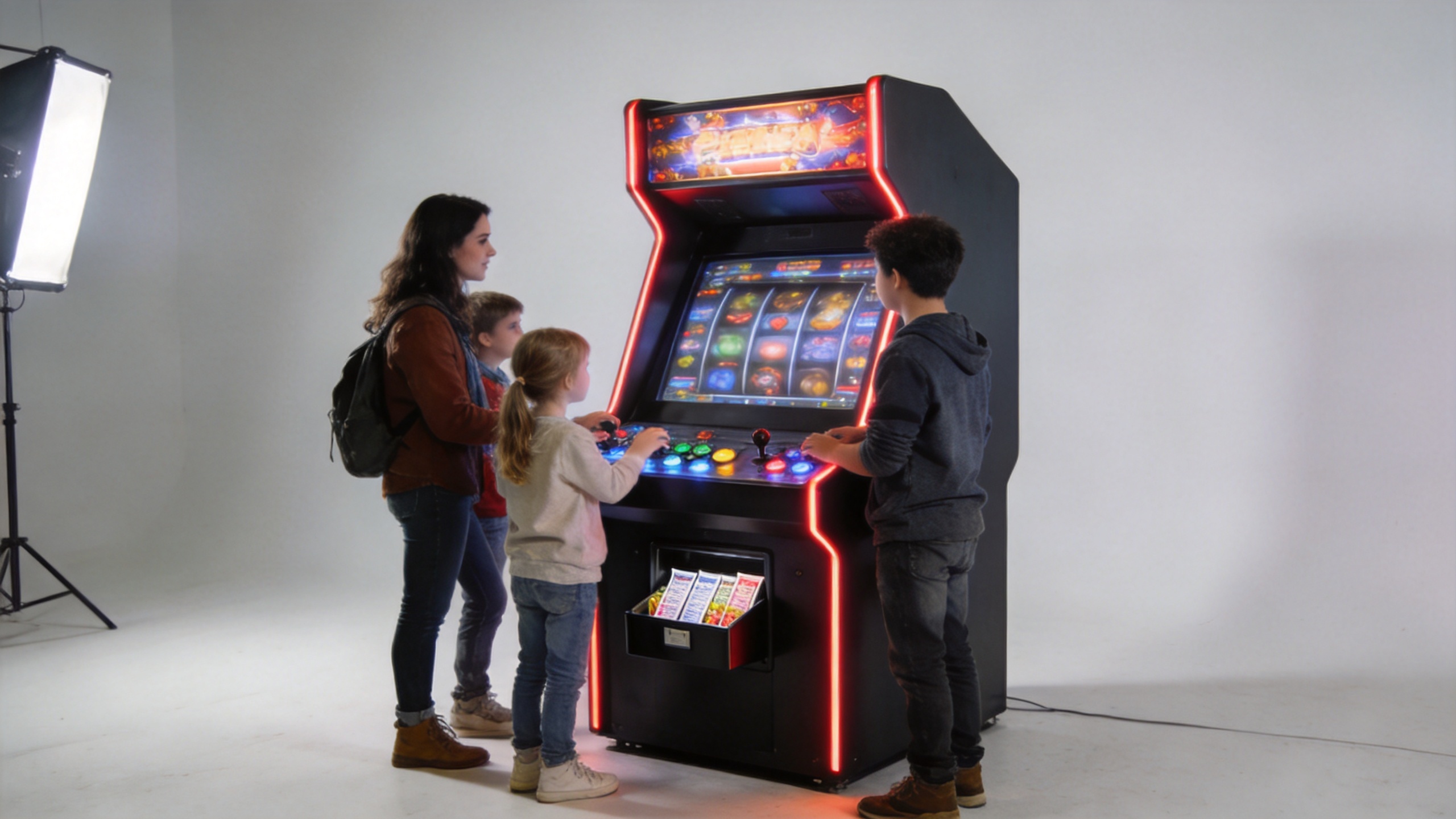
For redemption-oriented arcade equipment, players need to understand the connection between performance and reward. Ticket dispensers that work smoothly, clearly visible ticket output, score indicators, and well-presented prize displays make that loop easier to follow. A visible reward gives spectators a reason to watch and gives players a concrete reason to try again.
Prize visibility matters, but it should feel attainable and transparent. If the reward path is confusing, the accessory is not adding experience value. Pair arcade equipment with signage that explains the basic exchange process and keep prize displays organized enough to be seen from the game area. That supports anticipation without promising outcomes a player cannot reasonably understand.
6. Hygiene, maintenance, and convenience accessories
Some of the most valuable accessories for arcade equipment are nearly invisible when they work well. Cup holders where appropriate, bag hooks, cable management, replacement control parts, cleaning stations, and easy-to-service panels protect the continuity of play. A machine that is ready when a player approaches delivers more value than an elaborate feature that is frequently unavailable.
Maintenance-friendly choices also protect the player experience over time. For example, control covers that are easy to clean and modular parts that can be replaced quickly can help arcade equipment keep its intended feel through busy periods. It is not that maintenance is glamorous. It is that players notice immediately when a familiar game no longer responds as expected.
A practical priority order for venue operators
If budget requires a staged upgrade plan, prioritize arcade equipment accessories in this order:
- Reliable, comfortable controls for direct playability.
- Clear displays and readable game feedback for easy entry.
- Seats or ergonomics for games that ask players to stay longer.
- Meaningful sound, light, or haptic cues for immersion.
- Visible reward presentation for redemption engagement.
- Convenience and service accessories to keep the experience consistent.
This order can change by venue. A racing arcade may move seating and steering upgrades to the top; a redemption zone may put reward visibility first. Still, the principle holds: invest in the parts of arcade equipment that make play easier to start, more satisfying to continue, and clearer to remember.
Build a better experience one interaction at a time
The accessories with the most player value are not necessarily the largest or most expensive. They are the ones that make arcade equipment feel responsive, understandable, comfortable, and alive in the moment. Start by observing real player behavior, then choose upgrades that solve a specific point of friction or strengthen a specific moment of delight. That approach gives every accessory a purpose—and gives guests a better reason to come back for one more game.


 Hot News
