
 EN
What Are the Most Durable Arcade Machines for High-Traffic Family Entertainment Centers?
For a busy family entertainment center, durability is not simply about a cabinet that looks solid on delivery day. It is about how reliably the machine handles constant button presses, repeated door openings, cleaning, ticket or card-system use, and quick service between rushes. Durable arcade machines are commercial units built around accessible service points, replaceable wear parts, and a game format that fits the venue’s player mix.
As an operator evaluates a floor, the useful question is not “Which unit has the flashiest feature set?” It is: Which arcade machines can stay playable, safe, and easy to service when families are using them all day? That shift matters because downtime affects guest experience as well as the practical workload of the team. In other words, compare arcade machines by their operating life on the floor, not their showroom impression.
Start With the Right Definition of Durability
Durable arcade machines combine physical resilience, electrical reliability, and serviceability. A heavy cabinet alone is not enough if a technician cannot reach the power supply, control panel, or payment hardware quickly. Likewise, a visually simple game can be a strong long-term choice if its buttons, joysticks, sensors, and doors are designed as replaceable modules. When comparing arcade machines, ask which parts receive the heaviest use and how each is changed.
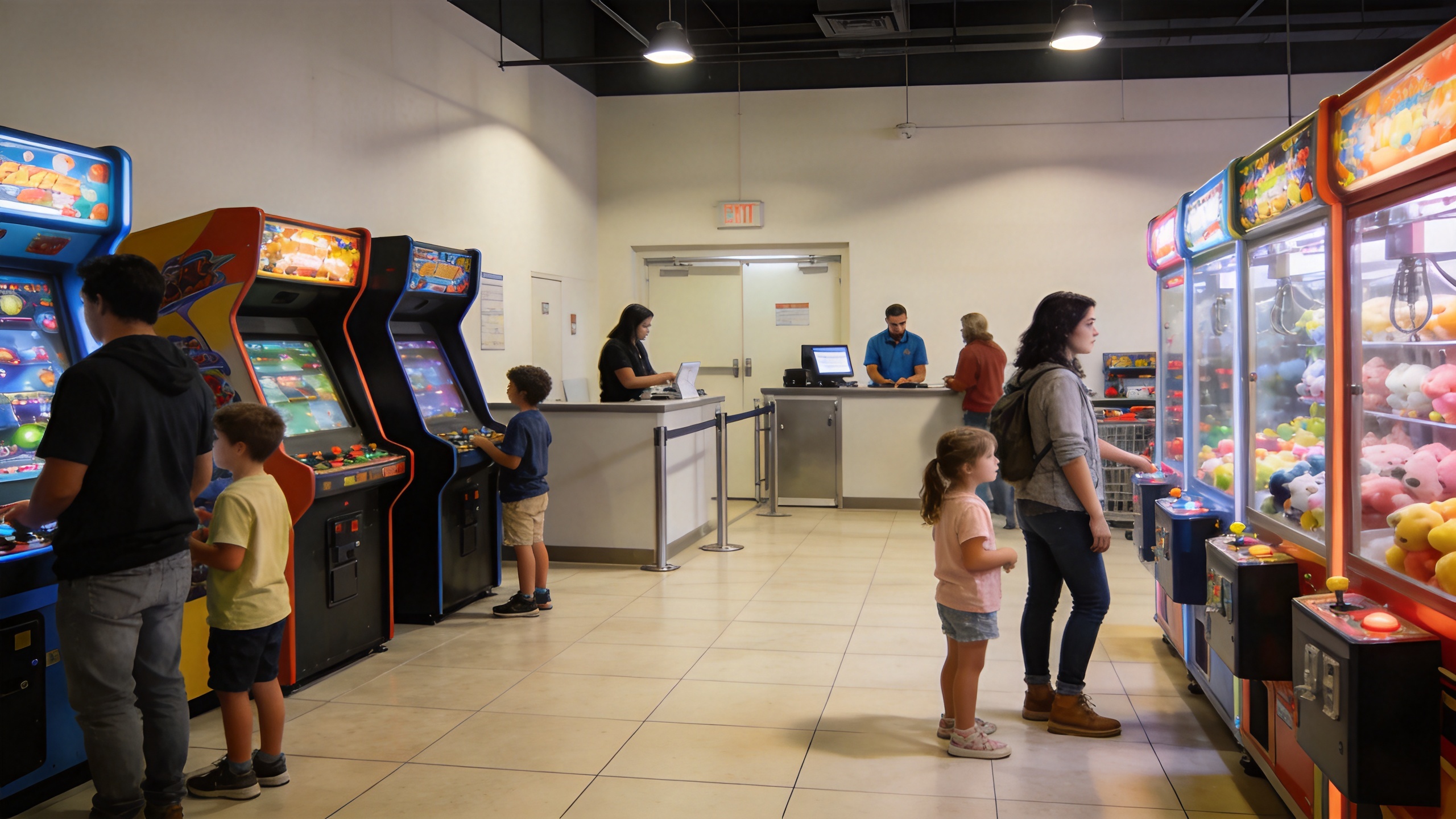
Most pre-purchase comparisons focus on screen size, cabinet artwork, and game novelty. What those comparisons can miss is how arcade machines behave after months of daily use, when control responsiveness, locks, cables, and moving mechanisms begin to show wear. For high-traffic sites, ask suppliers to explain which parts are routinely replaced, how those parts are stocked, and how a fault is diagnosed. This service conversation is central to selecting arcade machines for busy facilities.
Machine Categories That Usually Suit Heavy Family Traffic
Redemption and ticket-based games
Redemption-style arcade machines can fit family venues well because the play loop is easy to understand and visible rewards attract attention. Their durability depends less on the cabinet silhouette and more on the ticket path, sensors, dispenser access, prize-handling components, and control surfaces. Choose arcade machines with a clear service door, protected wiring, and parts that staff can inspect without dismantling the entire machine.
Video games with straightforward controls
Commercial video arcade machines with familiar buttons, steering wheels, or joysticks can sustain frequent use when the control assemblies are commercial grade and replacement access is direct. In family zones, cabinet height and control placement also matter. A game that forces smaller children to stretch for controls can receive rougher handling and create a less comfortable experience. For these arcade machines, request the control-service procedure before buying.
Racing, sports, and simulator-style units
These arcade machines are powerful traffic drivers, but they have more moving parts and may need closer attention to pedals, steering assemblies, seats, screens, and motion elements. They make sense when the supplier can document a sensible parts path and the venue has space for safe circulation around the cabinet. A flagship simulator may create visual impact, yet a mid-range workhorse can be the stronger choice when consistent throughput and manageable maintenance are the priority. High-use arcade machines in this category should also have clear access for routine inspection.
Crane and prize games
Prize games can perform well in a family entertainment center, but they should be evaluated as mechanical systems rather than decorative cabinets. Inspect door hinges, locks, gantry travel, claw mechanism access, wiring protection, and the ease of clearing a jam. A unit that lets staff reach common service points quickly is more suitable for a crowded floor than one that requires extended downtime for a minor adjustment. Among prize arcade machines, the maintenance path deserves as much attention as the game presentation.
What to Inspect Before You Order Arcade Machines
A practical evaluation starts with the touchpoints that guests use hundreds of times a day. Look for rigid cabinet panels, protected edges, secure fasteners, stable leveling points, and a finish that can tolerate routine cleaning. Then move inside: wiring should be organized and labeled, fuses and power components should be accessible, and ventilation should not be blocked by the final floor layout. These details make a meaningful difference when arcade machines are used continuously.
- Controls: Ask whether buttons, joysticks, steering parts, and sensors can be changed individually.
- Cabinet access: Confirm that locks, hinges, service doors, and control panels support quick inspection.
- Payment integration: Check where card readers or coin mechanisms are mounted and how they are serviced.
- Power protection: Plan dedicated, appropriate power distribution and review local electrical requirements before installation.
- Parts support: Clarify the ordering process, part identification method, and communication route for after-sales questions.
There is no universal answer here. A compact video cabinet may be appropriate near a busy walkway, while a larger simulator may require a more protected zone. The key is matching the duty cycle and location to the machine category rather than treating every cabinet as equally suited to high traffic. A site plan that considers how staff reach arcade machines during peak periods is more practical than a layout based solely on visual impact.
Design for Service, Not Just for the Opening Day
Early in the buying process, discussion often centers on unit price. The calculation changes after the first repair: parts availability, technician access, and the time required to restore play become much more important. This is why durable arcade machines should be judged by total operating effort, not only by the initial quotation. The lower-priced option can be costly in practice if its arcade machines are difficult to repair or support.
Ask for a maintenance schedule that covers daily visual checks, cleaning, cable and fastener inspection, and periodic review of power supplies and moving components. Commercial maintenance guidance consistently emphasizes documented opening and closing checks plus scheduled inspection. That routine will not turn a poorly supported cabinet into a durable one, but it can help operators catch developing issues while service is simpler. Make this checklist specific to the arcade machines on your actual floor.
It is also wise to keep a small on-site collection of approved high-wear parts based on the specific equipment mix. The exact list varies by game type, so it should come from the supplier’s service documentation rather than assumptions. Record faults by machine and component; after several months, those records can inform the next equipment refresh and reveal which arcade machines receive the hardest use.
Build a Durable Floor Mix
The most resilient floor is rarely made of one category alone. A balanced mix of redemption games, approachable video arcade machines, selected prize games, and carefully placed larger attractions spreads use patterns across the venue. It also helps the team learn which formats suit the local audience and which units need more frequent attention. A diverse but serviceable group of arcade machines is easier to manage than a floor of identical complex units.
Placement matters as much as selection. Avoid putting a high-maintenance machine where staff cannot reach it easily during a busy period. Leave working space around service panels, keep ventilation paths clear, and position popular arcade machines where queues do not block emergency routes or nearby games. Observe the floor after opening: waiting behavior, repeated control issues, and staff callouts are operational signals worth recording.
A Supplier Conversation Worth Having
For a family entertainment center planning a long-lived floor, supplier support is part of the durability decision. ACE Amusement offers a portfolio spanning arcade games, redemption machines, video simulator games, and amusement equipment, which can help buyers discuss a category mix with one equipment partner. Before finalizing any order, request current product-specific specifications, installation requirements, service guidance, and available replacement-part information for the models under consideration.
The durable arcade machines for your venue will be the ones that fit your traffic level, player age range, staff capability, and service plan. Prioritize accessible maintenance points and credible parts support over claims that a single cabinet is right for every location. That approach gives your team a more practical foundation for keeping the floor active through busy family seasons.


 Hot News
